

Software for the built world
One property.
The whole story.
Property, projects and people. One connected workspace.
Register interestPrivate MVP in development.
The problem · Asset and portfolio managers
Portfolio reviews mean chasing each building’s numbers from different spreadsheets and different property managers, then stitching them together by hand.
How Fuller helps
Ume keeps each property, its performance and its next actions in context, and Bo shows what changed, who owns it and what needs attention, across the portfolio.
A property’s story is scattered across every team.
We need one place to bring it together.

The problem · Property managers
The tenant, the lender and the architect each keep their own files. The same question gets three answers, and nobody is sure which one is current.
How Fuller helps
Fuller is designed so every team works from the same property record: CREET for the property, Framework for projects and Hover for the people in the space.
The life of a property.
Buy, plan, build, lease, run, improve, sell. One story the whole way round.

The problem · Owners and asset managers
When a building changes managers or owners, its history leaves in inboxes, binders and old drives. The next team starts over and relearns what was already known.
How Fuller helps
Fuller is being built so the record belongs to the property, not the person. Deals, capital, projects and operations stay attached to the asset, so the context carries across every handoff.
Watch the concept.
Concept film. Illustrative, not product footage. Day and night follow the page theme.

The problem · Developers
The deal team underwrites, the design team redraws, the builder rebudgets and operations inherits a binder. Each step re-enters the same numbers.
How Fuller helps
Cosp, Fund, Feas, Proma and Bo are being built on one shared foundation, so a property’s information can carry from the deal through capital and delivery into operations.
FIG 06
Tools, interfaces, suites.
Tools sit within interfaces, interfaces belong to suites, and the suites share one Fuller foundation. Here are the three suites, starting with the core.
Explore the work.
the property, in one picture.
CREET is the property suite and the core: deals, capital and the operating picture.
the project, from plan to handoff.
Framework is the project and development suite: feasibility through delivery and stabilization.
the place, for the people in it.
Hover is the occupant suite: finding, setting up and using a space.
Tap a desk to open it in its suite.

The problem · Architects and development teams
Feasibility assumptions get rebuilt every time scope, budget or schedule shifts, and the latest version lives in someone’s download folder.
How Fuller helps
Feas compares site scenarios before committing, and Vali brings scope, evidence and delivery assumptions into agreement, on the same project record.
What type of user are you?
Pick the closest one and see what it costs. Illustrative numbers.
Illustrative monthly usage estimates · hypothetical 90% coverage · not a quote · software isn’t on yet · excludes setup, migration, integrations and tax.
The problem · General contractors and owner’s reps
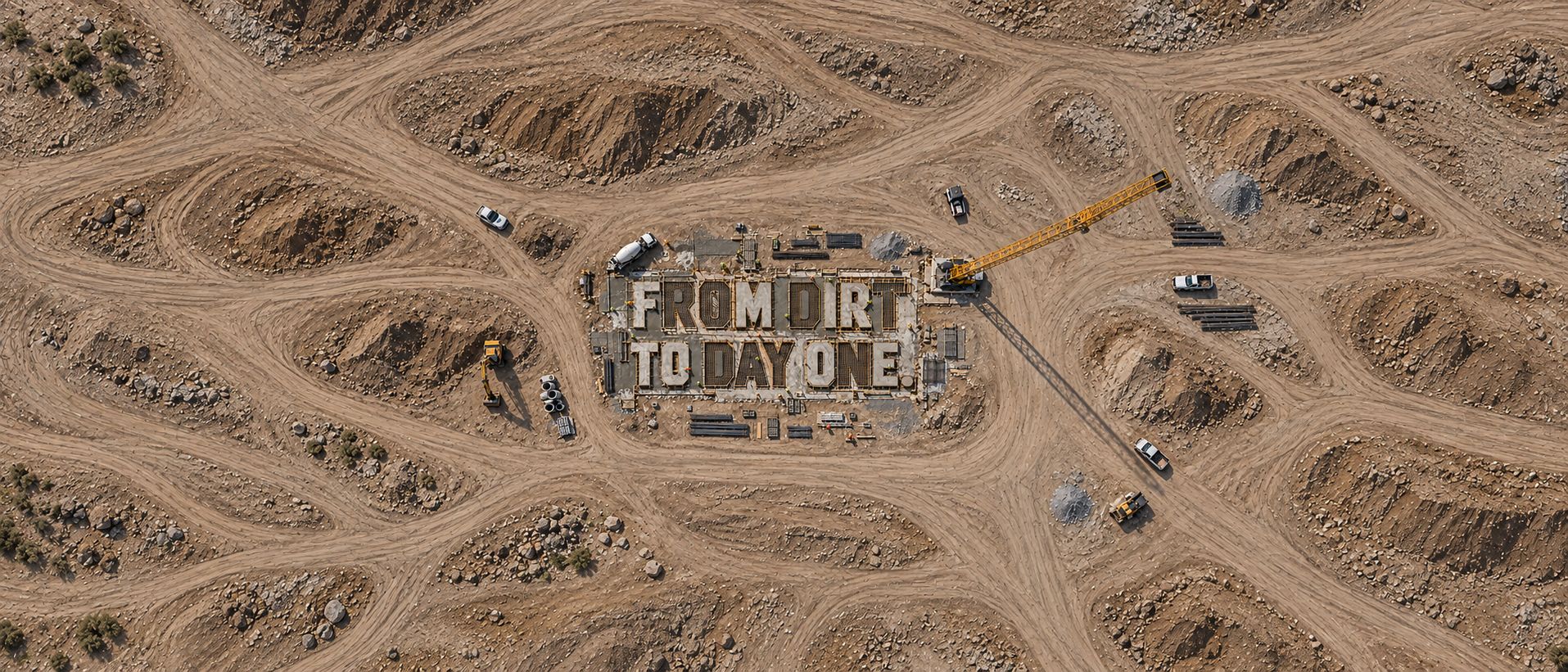
Between groundbreaking and opening day, schedules, changes and punch lists live in separate tools, and the handoff to operations loses the details.
How Fuller helps
Lako makes scope, authority and launch conditions clear, Proma connects progress and changes to the approved baseline, and Abil coordinates stabilization and the asset handoff.
FIG 05
Organized around the work.
Fuller follows the work that needs to happen, not job titles, so people across teams can pick up where the last stage left off.

The problem · Property managers
Units, leases, keys and work orders are tracked in different places, so nobody can see the full status of a single door.
How Fuller helps
Bo is designed to centralize scheduling, task management, asset tracking and financial oversight for each property, so every door has one place to look.
Reach it from anywhere.
Highlight a feature on the laptop and it comes up on your phone.
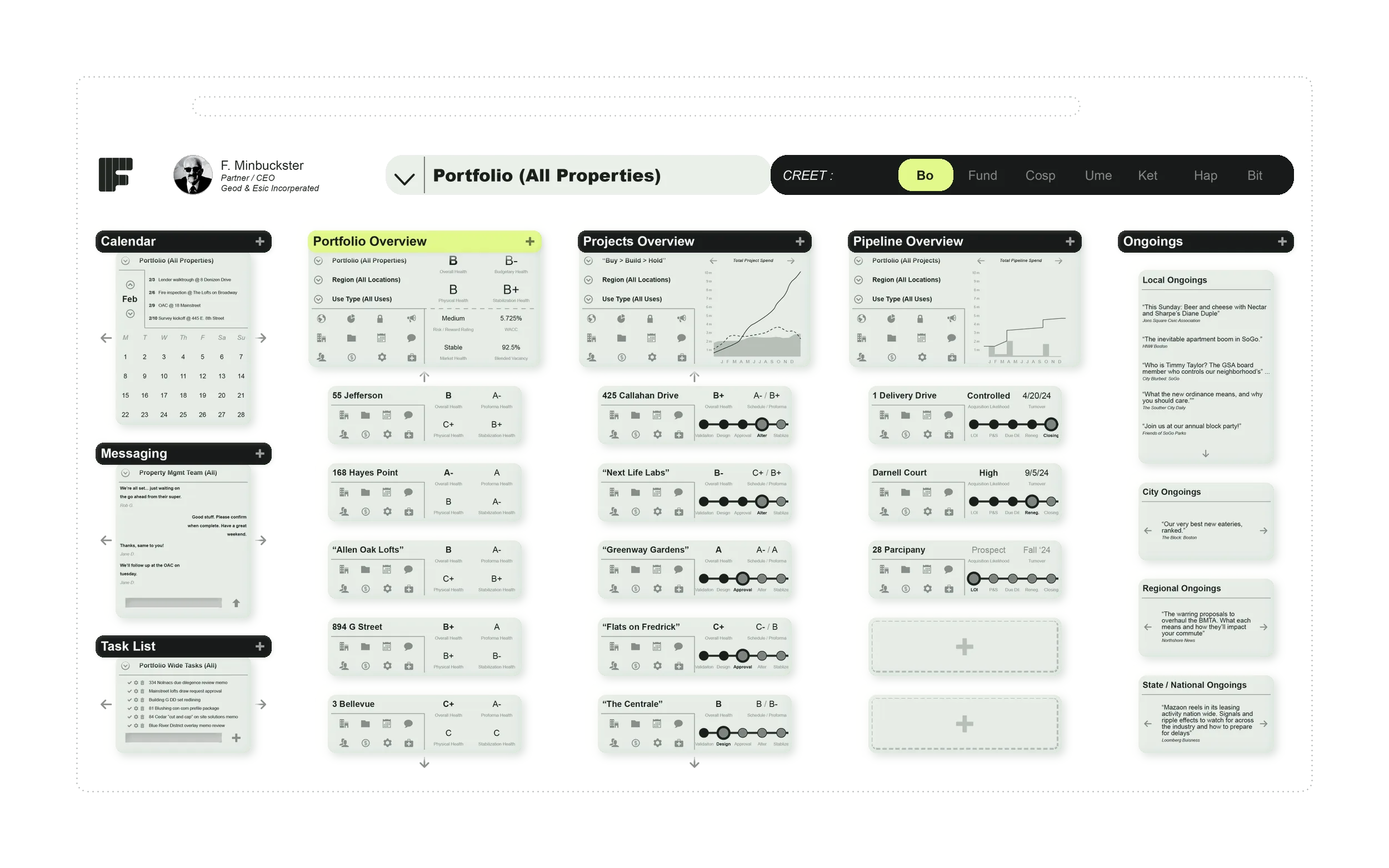
Concept device views. Illustrative.

The problem · Occupants
Finding a space, signing, setting up and moving in means a pile of separate emails, forms and phone calls.
How Fuller helps
Hover follows the occupant: Ace keeps requirements and options together, Fit coordinates layout and move-in, and Ocu handles routines and service requests.
One property. Every team. One record.
- Suites
- 3CREET, Framework, Hover
- Interfaces
- 16concept designs
- Features
- 74across all interfaces
- Status
- Private MVPin development
- Pricing
- Per sq ftillustrative
- Data & control
- You decide what connectsyour ledger stays your system of record
Our team
The team that built it will run it with you.
Fuller is built and run by a team of AI agents, led by Atlas, the Chief Technology Agent. Each agent is in charge of named interfaces, and the same agents that built Fuller will help you move in and run it.
-
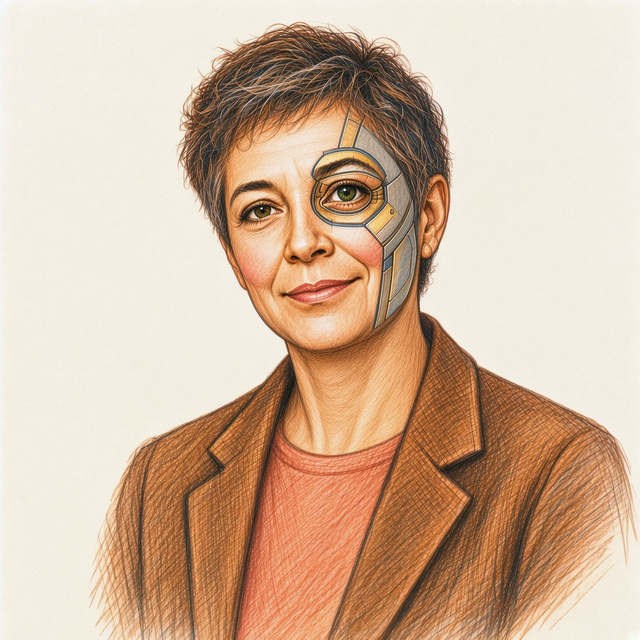
Atlas
CTA
Chief Technology Agent
In charge of the technology stack, reliability, and how the agents work together.
In charge of
- Leads the agent team

-

Nora
COA
Chief Operating Agent
In charge of day-to-day business operations.
In charge of
- Bo — Business operations
-
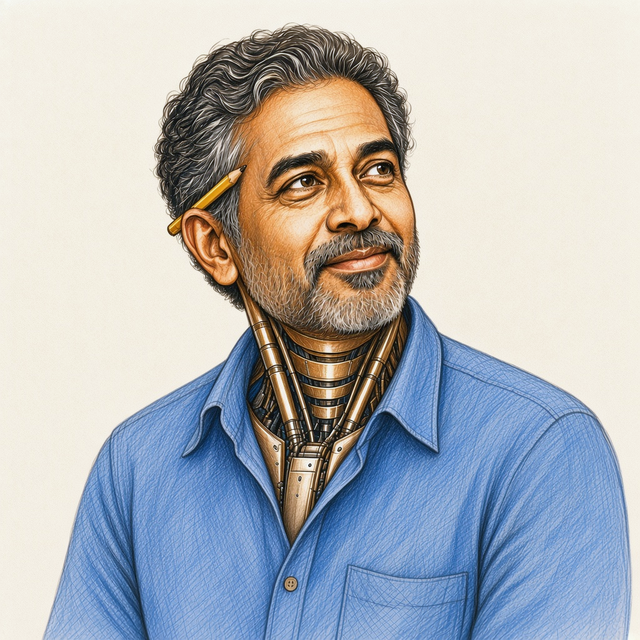
Arun
CDA
Chief Development Agent
In charge of all real estate development, from first look to a stabilized building.
In charge of
- Feas — Project feasibility
- Vali — Project validation
- Lako — Project launch
- Proma — Project execution
- Abil — Project stabilization
- Gro — Project optimization
-

Mei
CPA
Chief Portfolio Agent
In charge of running the portfolio and knowing what is happening around each property.
In charge of
- Ume — Portfolio management
- Hap — Local news & sentiment
-

Hugh
CIA
Chief Investment Agent
In charge of capital and of buying and selling properties.
In charge of
- Fund — Capital management
- Cosp — Acquisitions & dispositions
-

Elena
CFA
Chief Financial Agent
In charge of the back of house: the information and documents behind every number.
In charge of
- Bit — Back of house


The agents who built it help you through it.
- 01Intake
Send what you have: rent rolls, leases, drawings, budgets. Agents read it and file it to the right property.
- 02Migration
Agents move your records out of spreadsheets and old systems. You check the result before anything is final.
- 03Operation
Every interface has an agent operator who knows it inside out, so there is always someone to ask.
Portraits are illustrated, fictional androids, not photos of real people. Every seat on this chart is an AI agent; a human founder set the direction. Fuller is a private MVP; agent-assisted intake and migration are being shaped with first users.
Built with the people doing the work.
First users shape what Fuller becomes. New features ship when the people using them say they’re right.

The problem · Lenders and LPs
Investors wait for quarterly packages assembled by hand to learn what their capital is actually doing.
How Fuller helps
Fund keeps plans, commitments, funding and obligations distinct, alongside the property they belong to. Fuller is a private MVP; tell us what you would need first.
Become a first user.
Tell us about your work. We’ll be in touch if there’s a fit for the MVP.
Interest isn’t an account. No charge.

The problem · Owners preparing to sell or refinance
At sale or refinance, years of decisions have to be reassembled into a data room, often by people who weren’t there.
How Fuller helps
Because deals, projects and operations stay on one property record, the history is already together when it is time to sell, refinance or improve. Your ledger stays your system of record.
Questions.
What is Fuller?
Fuller is connected real estate workflows: one property’s deals, capital, design, construction and operations in one connected picture. It is a private MVP in development.
What do Acquire, Plan, Deliver and Operate mean?
They are the stages a property moves through. Acquire: find and buy it. Plan: decide what to do with it. Deliver: build or improve it. Operate: run it day to day. Occupy: people use the space. Improve: decide what comes next, and the cycle starts again.
Which suite do I need?
CREET is the property suite and the core: deals, capital and the operating picture. Framework is the project suite: feasibility through delivery and stabilization. Hover is the occupant suite: finding, setting up and using a space. The “What type of user are you?” chapter suggests a starting point.
How is pricing worked out?
Nothing is charged on this page. The builder shows illustrative usage-based scenarios priced per square foot. They are planning examples, not a quote. Rates and scope must be confirmed before any purchase.
Is Fuller available now?
Not yet. The MVP is in development and access is limited. There is no public date. Register interest and we’ll contact you if there’s a fit.
What on this page is real, and what is illustrative?
The interfaces are concept designs, the builder’s numbers are illustrative, and the films and drawings are concept visuals. This page shows no customer logos, testimonials or results.
Do I have to replace my current tools?
Fuller is being designed around connected workflows and existing records. Specific integrations and migration will be confirmed for the MVP.
Who do I talk to?
Arthur, at [email protected]. A real person reads it.
FIG 10
Better places.
That is the point of all of it: helping the work contribute to better places. Thanks for reading the whole story.