
Begin with an authorized launch baseline
Before evaluating execution tools, identify what the project was actually authorized to deliver. Assemble the approved scope, budget, schedule, delivery approach, team responsibilities and conditions attached to launch. Keep early-release work and a fully authorized launch distinct.
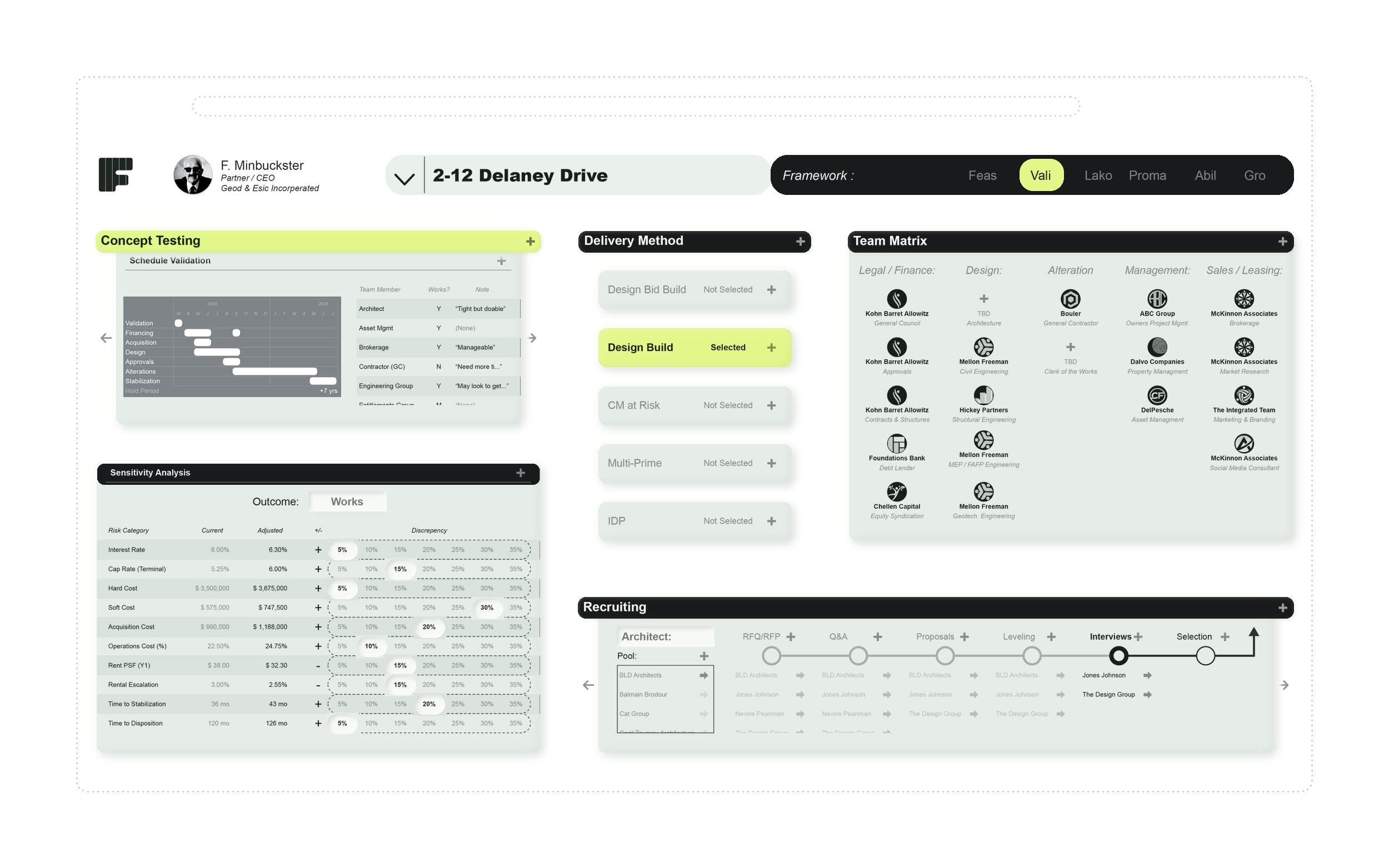
Fuller’s Framework model separates feasibility in FEAS, validation in VALI and launch preparation in LAKO. The intended LAKO handoff gives PROMA an agreed baseline and a correctly scoped team. This is a useful way to structure evaluation: require the supplier to show what is merely proposed, what has been reviewed and what the designated authority has approved. Selecting a contractor or changing a date should not imply a signed contract or unlimited permission to proceed.
Connect a change to cost, time and decision rights
Choose one realistic change with a scope consequence, a cost consequence and a schedule consequence. Follow the initial issue through supporting evidence, assessment, recommendation and approval. Ask how the record distinguishes a potential exposure from a committed cost and an approved baseline change.
The project manager coordinates the decision but may not hold spending, contractual or contingency authority. Finance, legal, the owner’s sponsor and the relevant professionals may each have a required role. A useful system makes the next actor and the missing evidence clear without erasing the earlier forecast. Test a rejected or deferred change as well as an approved one; it should remain understandable in the project history.
Keep progress, forecasts and accounting separate
Project progress should describe what has been achieved and how that judgment is supported. A schedule forecast describes what the team now expects. Financial reporting may include budget, commitments, forecast exposure and actual payments, each with a distinct meaning and source.
PROMA’s supplied designs include project health, progress, schedule, scope and financials views. Use those screens to discuss the intended workflow, then require evidence of any live behavior you need. A payment recommendation is not proof of payment; the designated accounting system remains authoritative for actual accounting. Nor does owner reporting replace contractor or professional responsibility for delivery, quality, safety or contractual obligations.
Make the evaluation demonstrate a weekly review
Give the prospective supplier an anonymized weekly-review scenario: one late activity, one potential change, one disputed progress claim and one pending approval. Ask the team to prepare an owner decision list showing consequence, responsible person, due date and evidence. Check whether a reviewer can move from the summary to the underlying record without a separate explanatory spreadsheet.
Agree on a narrow pilot and a success measure such as the completeness of decision records or the time spent reconciling the review. Include access changes when a participant leaves and an export of the project history. Establish the route to completion and operations before rollout, so closeout is not an afterthought. Fuller currently offers concept exploration and registration of interest; the MVP is locked, and supported project workflows must be confirmed before evaluation.
Where this fits in Fuller
Fuller is presented here through its interface concepts and intended workflows. MVP access is currently locked. Registering interest does not create an account or provide access; availability, supported connections and a pilot scope must be confirmed before an evaluation.
Questions to ask before choosing software
How is owner project management different from contractor project management?
The owner focuses on investment objectives, authorized scope, approvals, cost and the eventual operating asset. Contractors and professionals retain their own contractual delivery responsibilities. Software should support the relationship without obscuring those boundaries.
Should a forecast change update the approved baseline?
Not automatically. The current forecast should reveal expected outcomes, while the approved baseline records the authorized commitment. Any approved baseline change needs its decision, authority and history retained.
Which Framework interfaces support the intended project lifecycle?
FEAS addresses feasibility, VALI validation, LAKO launch, PROMA execution, ABIL stabilization and turnover, and GRO operating improvement. They describe related responsibilities, not a promise of current MVP availability.
What is the smallest useful project-controls pilot?
Use one project, a defined review period and a representative change or approval workflow. Include the project manager, sponsor and finance participant so the evaluation tests a real decision handoff.
Tell us what you’re working on.
MVP access is currently locked. Register your interest and describe the work you want to connect.
Register interest in this workflow ↗