
Describe the funding problem in states and dates
Choose a representative project or investment vehicle. List its expected uses of funds, proposed sources and timing, then identify which source amounts are modeled, offered, committed, closed or funded. State the evidence behind each classification. A promise under discussion and money received may sit in the same model, but they should never appear equally certain.
Add the dates and conditions that could prevent funding. Distinguish the person collecting evidence from the person who reviews it and the authorized signatory. This exercise often exposes the real requirement: the CFO needs dependable liquidity and obligation status, while the controller needs reconciliation and treasury needs an actionable schedule.
Follow one capital event across the buying group
Walk a single event from approved requirement to supporting documents, authorized decision, execution and accounting confirmation. Ask which participants can see borrower, investor and guarantor information. An operating partner may contribute evidence without access to every investor record.
Lenders, LPs, GPs, counsel and finance staff have different questions about the same event. Record what each must supply, approve or receive. Test an exception, such as a condition arriving late or a commitment amount changing. The history should explain what changed and why. Sending a notification or editing a forecast must not be treated as signing an agreement, initiating a bank transfer or posting to the ledger.
Keep capital coordination connected to its sources
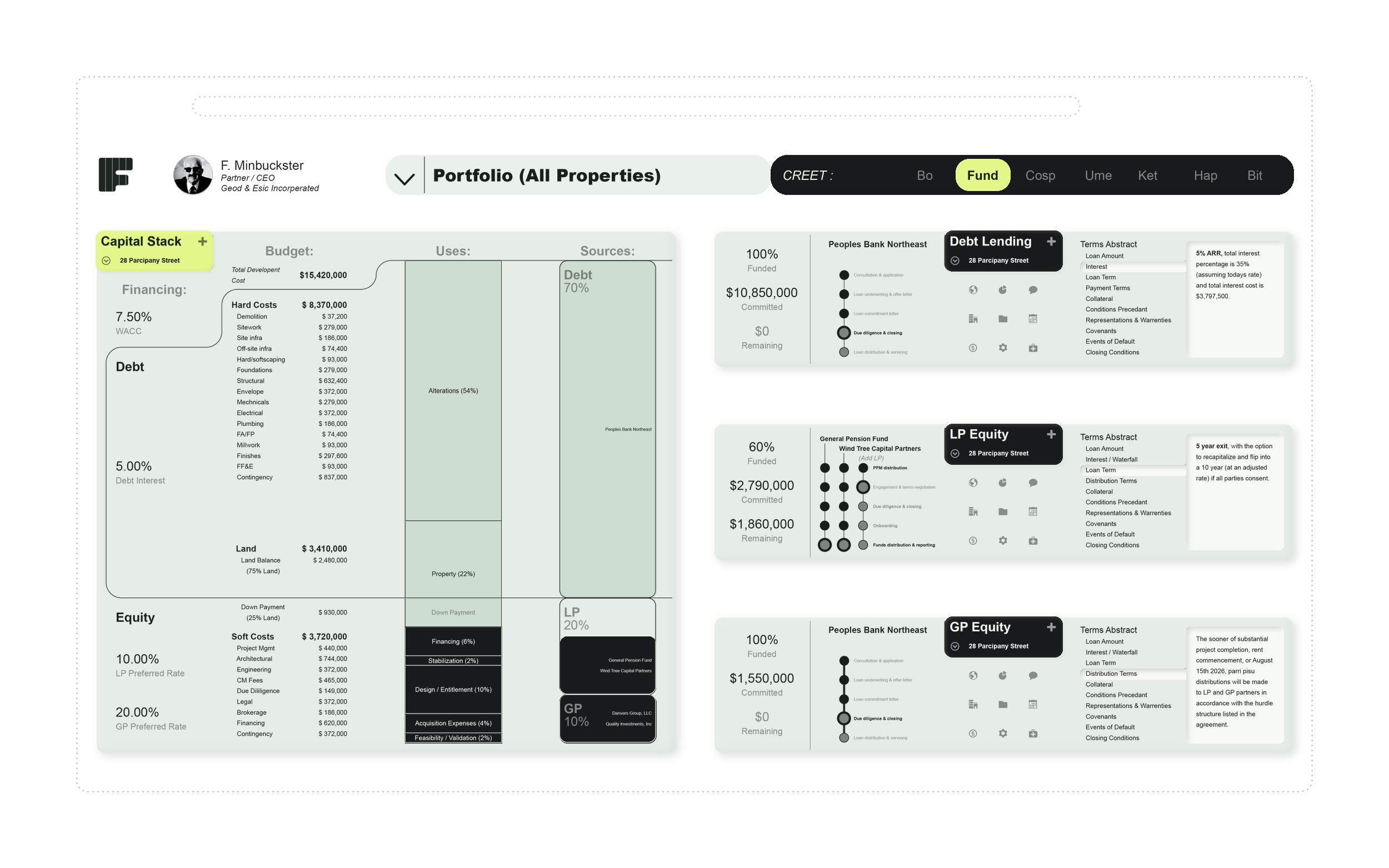
Fuller’s FUND concept groups capital stack management with debt, LP equity and GP equity views. Its intended role is source-side capital coordination. Property performance belongs with the asset record; project scope and uses remain with the project team; formal accounting and legal records retain their designated owners. BIT provides the related organizational context in Fuller’s interface model.
During an evaluation, ask for the actual supported imports, exports and connections rather than assuming automatic synchronization. Confirm who resolves a difference between a model, an executed document and accounting actuals. Ask how a corrected funding event is recorded without silently rewriting history. These are requirements to verify with any supplier, including Fuller when a pilot becomes available.
Build an evaluation that finance can sign off
Prepare an anonymized scenario with one debt source, one equity source, a funding condition and a changed assumption. Require the presenter to explain the status, amount, date, evidence and accountable next actor for each item. Repeat the check from the CFO, controller and restricted external participant’s perspective.
Define acceptance around reconciliation and decision readiness: can the finance team identify what is available, what is still conditional and what requires authority? Confirm retention, permissions, export and exit arrangements before using live financial information. Record unresolved requirements openly. Fuller’s current landing page offers interface exploration and registration of interest; it does not establish access to a live capital platform or a verified banking or accounting connection.
Where this fits in Fuller
Fuller is presented here through its interface concepts and intended workflows. MVP access is currently locked. Registering interest does not create an account or provide access; availability, supported connections and a pilot scope must be confirmed before an evaluation.
Questions to ask before choosing software
What is the difference between committed and funded capital?
A commitment records an agreed obligation subject to its terms; funded capital reflects an actual funding event. Software should retain the evidence, dates and conditions that distinguish them instead of treating both as cash available.
Who participates in a capital software evaluation?
The CFO or finance lead usually frames the need, with treasury, the controller, investor relations, legal and technical reviewers contributing. The actual sponsor and signatory depend on the organization’s authority structure.
Does FUND replace the general ledger or execute payments?
That should not be assumed. The intended Fuller model separates capital coordination from accounting actuals and authorized payment execution. Current product scope and any supported connection must be demonstrated.
What can I access today?
You can explore the FUND and related interface designs and register interest. MVP access is locked, and registration does not create an account or authorize financial activity.
Tell us what you’re working on.
MVP access is currently locked. Register your interest and describe the work you want to connect.
Register interest in this workflow ↗